

Teaching yoga is a dream job for many dedicated practitioners. We often have students reaching out to us with the same query: whether it’s possible to earn a steady income through yoga. The answer is yes, but remember it requires patience, consistency, and a strategic approach to your career.
In our experience training yoga teachers, most graduates don’t rely on a single source of income. They usually teach regular classes, host workshops, and offer online sessions. Some also supplement their earnings with private lessons or retreats.
To turn your passion into a profession, begin with a strong foundation in a 200-hour teacher training program. It provides certification, practical skills, and confidence, empowering you to pursue your dream of becoming a professional yoga teacher.
This blog guides you in discovering the ways yoga teachers make money. Here, we aim to clarify your income streams and visualize your yoga teaching career.
How Do Yoga Teachers Make Money?
1. Combine teaching yoga with a second source of income

At the very start of your career as a yoga teacher, it is a safer bet not to jump into full-time yoga teaching right away. Many entrepreneurs feel insecure about their financial situation in the beginning. Maintaining a part-time job during the transition to teaching yoga provides greater security. The longer you teach, the more you discover how much you can teach and earn in the long term. It helps you find what works for you. It also gives you time to build a network for long-term teaching opportunities.
At some point, you will have a stable income from teaching yoga, and you will be able to make a living as a yoga teacher. This might enable you to drop your current job and focus solely on teaching yoga. For many yoga teachers, that is a dream come true. On the other hand, though, keeping a job next to your yoga teacher career might work better for you, as it offers you different ways of working: at the office and on the mat.
2. Teach corporate or private yoga classes to make a living as a yoga teacher
Corporate yoga classes
The positive effects of yoga have gained recognition in the corporate world, and companies are increasingly open to offering yoga classes to their employees. Research shows that yoga is effective in preventing and recovering from common stress-related health issues. Sick employees, due to stress and an imbalance in their lives, cost companies billions of Euros every year. If you have been working in the business world yourself, you might benefit from your own network and experience to teach office employees and help them get a little break from their often stressful, sedentary lifestyles. Given the often large budgets companies have, teaching corporate yoga classes can be a lucrative and steady source of income for yoga teachers.
Private yoga classes
Students in your group classes might seek individual guidance, especially if they have special needs. And some students simply want to dive deeper into their practice. Teaching private yoga classes allows you to guide your students much more individually and help them reach individual goals.
Although a 200-hour yoga teacher training gives you an in-depth understanding of the foundations of yoga, teaching one-to-one yoga might sometimes require specific extra skills. If the student requires special attention due to a medical condition or injury, make sure you feel confident offering individual guidance, modifications, and adjustments. If you have any doubt, do not hesitate to ask the student to check with their physician. Especially when you teach one-on-one, remember to maintain professional boundaries in the teacher-client relationship.
When offering private yoga classes, also recognize the increased value you provide and do not hesitate to price your service accordingly.
If you’re planning to teach independently, this guide on how to become a freelance yoga teaching will help you move forward with clarity.
3. Online opportunities to make a living as a yoga teacher: yoga videos, social media and content creation
In the modern digital world, there are countless opportunities to earn money through online services. You do not need to be an expert in audiovisual media to make your own yoga videos or online courses. Do you like writing or creating content for social media? Then this is a nice way to reach a wider audience. You can work on sponsored content, cooperating with yoga brands and organizations. Some yoga studios offer paid jobs for content creators or social media marketeers -a great opportunity to add a financial standing leg.
4. Manage your own retreat center or wellness studio
Do you like managing and organizing? Then consider running your own studio, spa or wellness center. These possibilities require quite some investment of time and capital in the beginning, but will pay off in the long run and enable you to make a living as a yoga teacher.
The best way to gain experience in this field, is to start working as a yoga teacher at retreat centers. Many wellness centers around the world offer jobs for yoga teachers. Many yoga teachers combine travel with temporary teaching positions at yoga retreats, allowing them to teach in the most beautiful places and gain insights into running such a center. Additionally, you can learn complementary skills such as massage, counseling, or nutrition that will help you as you start your own retreat or wellness center. Do not forget that alongside the 'soft' skills of the trade, you will also need to acquire 'hard' skills, such as developing a solid business plan, marketing, and financial planning.
5. Organize workshops for colleague teachers or other health professionals
Would you like to share your knowledge and teaching skills with other yoga and health professionals? Especially if you have a professional or educational background in a field related to the applications of yoga, such as health care or anatomy, this could offer an interesting professional challenge and be financially attractive. You can offer workshops and training sessions designed specifically for students who want to become yoga teachers, as well as for other health and fitness professionals. In these sessions, try to answer common questions, such as how much it costs to become a yoga teacher, whether you need flexibility to learn yoga, and more. Such insights are helpful for students eager to build their careers in yoga teaching and will help you build a strong rapport with your students.
For a better understanding, explore How to Create a Yoga Business Plan That Works: 10 Clear Steps
How Much Can Yoga Teachers Earn? A Realistic Breakdown
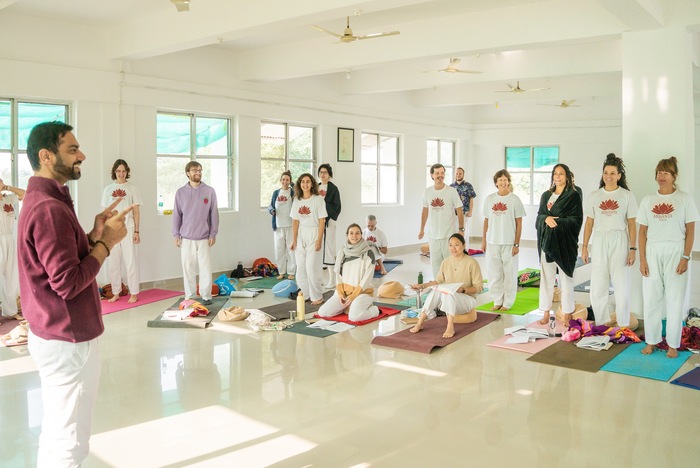
A yoga teacher's income can vary widely depending on experience, location, and how you structure your work. Unlike a fixed salary job, most teachers build their income through multiple streams over time.
In our experience training yoga teachers across Europe and internationally, earnings tend to grow gradually as teachers gain confidence and experience, expand their offerings, and find their niche.
Beginner Level
At the beginning, most teachers work part-time and focus on gaining more experience.
Typical earnings:
- €20–€50 per group class (studio rate)
- €25–€60 per hour for small group or beginner sessions
At this stage, income is usually supplementary, not sufficient to support a full-time living. The priority here is building teaching confidence and consistency.
Intermediate Level
As teachers gain experience, they begin to diversify their income and earn more consistently.
Typical earnings:
- €50–€100 per private session
- €30–€80 per student for workshops
- €300–€1,000/month from a mix of classes and private clients
This is where many teachers start to feel more financially stable, especially if they have already built a loyal student base.
Advanced Level
Experienced teachers often combine multiple income streams and may work independently or run their own offerings.
Typical earnings:
- €1,000–€3,000+ per month (combined income streams)
- Higher rates for retreats, specialized workshops, or online programs
Teachers at this level often stand out by offering unique practices, such as slower, deeper practices like Yin Yoga for stress relief, which can attract a dedicated audience and enable higher-value classes and workshops.
Many also deepen their expertise through advanced programs, such as a 300-hour yoga teacher training, which support long-term growth and professional development.
A Realistic Perspective
There is no fixed salary in yoga teaching. Your income depends on how consistently you teach, how you position yourself, and how willing you are to grow beyond just studio classes.
Some teachers begin earning within a few months, while for others it may take a year or more to build a steady income. The ones who succeed in the long term are those who stay consistent, continue learning, and gradually expand their opportunities.
Why Your Training Matters More Than You Think
Your ability to build a sustainable career starts with the quality of your training. A professional Yoga Alliance-accredited training gives you the authority you need to start teaching worldwide.
Many consider a 200-hour yoga teacher training the strongest foundation for teaching safely and confidently. As you grow, many teachers deepen their knowledge through a 300-hour yoga teacher training, which allows them to refine their teaching skills and expand their expertise.
Over time, combining strong foundational training with specialization creates more opportunities for growth and income.
Choose the right training path, read our complete guide on Online, Residential, or Hybrid Yoga Teacher Training: Which One Is Right for You
Making a Living with Teaching Yoga and Your Vision of Life
While considering all the different options you have as a yoga teacher to create a sustainable and financially rewarding career, keep two questions in mind: What are your unique skills and talents, and how can you combine them with teaching yoga? And, which way of working and living suits the lifestyle of your dreams?
If you have completed a 200-hour yoga teacher training at Arhanta, you may have heard Dr. Ram Jain talk about creating 'your vision of life’. Where do you see yourself in five to ten years, in terms of career, relationships, lifestyle, health, spirituality, and leisure? And how can you work towards this lifestyle you are dreaming of? Once you have a vision for your life, you can set concrete goals to get there. Realizing you are on the right path might already make you feel content in the moment, even if you aren’t there yet.
Common Mistakes Yoga Teachers Make (And How to Avoid Them)
In our experience training yoga teachers, many challenges don’t stem from a lack of passion but from avoidable mistakes made by beginner yoga teachers early in their journey. Being aware of these common beginner yoga mistakes can save you time, energy, and frustration as you build your path.
1. Relying Only on Studio Classes
Many new teachers assume studio classes will be their main source of income. In this early period, they often stick to the studio classes and ignore other opportunities. While studios are a great place to start, relying on them alone often leads to inconsistent earnings. Teachers who have successfully built a sustainable career in yoga usually expand their income by offering private sessions, workshops, or online teaching within the first year.
2. Not Developing a Clear Niche
Trying to teach “everything to everyone” can make it harder for a teacher to stand out. In reality, students are often drawn to teachers who offer something specific, whether that’s beginners’ yoga, dynamic yoga styles like Vinyasa, therapeutic practices like Pranayama or Yoga Nidra, or slower styles like Yin Yoga.
Specializing allows you to:
- Attract a more dedicated audience
- Build deeper trust with students
- Offer higher-value classes and workshops
3. Underpricing Their Services
Many teachers undervalue their time, especially in the beginning. While it’s natural to start modestly, consistently underpricing can make it difficult to grow financially. As a yoga teacher, you shouldn’t compromise your worth as a yoga teacher.
As your experience grows, your pricing should reflect:
- Your training
- Your teaching quality
- The value you provide to students
4. Skipping Continued Learning
Completing a basic certification is just the beginning. Teachers who stop learning often feel stuck or lack confidence as they grow.
In contrast, those who continue their education, whether through advanced programs or specialized training, tend to evolve faster and create more opportunities for themselves.
For a clearer understanding, you can explore our detailed blog, "Can You Teach Yoga Confidently with a 200-Hour Certification?"
5. Avoiding Online Opportunities
Some teachers hesitate to teach yoga online, thinking it requires advanced tech skills or a large following.
However, even simple online offerings, like small group classes or recorded sessions, can:
- Expand your reach
- Create additional income
- Provide flexibility in your schedule
- Let you reach students globally
Click here to explore the Benefits and Drawbacks of Online Yoga Teacher Training
Final Thoughts
Building a career as a yoga teacher is not just about earning, it’s about creating a meaningful and sustainable path that aligns with your passion.
From our experience, success doesn’t come overnight; it takes dedication, hard work, and consistency. Those who are running a successful yoga studio or yoga retreat today are the ones who stayed consistent, continued learning, and remained open to growth and new opportunities.
If you’re willing to learn and show up consistently, you are already ready to begin. You can explore our 200-hour Yoga Teacher Training in the Netherlands to start your journey with a strong, authentic foundation.

Holistic Hatha Sequencing for Practitioners & Teachers
Get 17 primary asanas and key principles for a balanced practice sent straight to you.