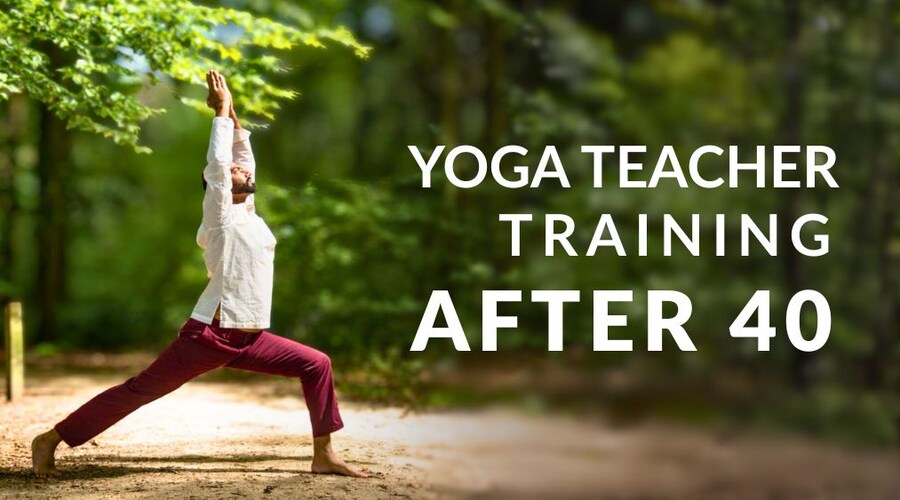

One of the most common questions I hear from students in their 40s, 50s, and 60s during yoga teacher trainings is, “Am I too old to become a yoga teacher? They often speak about stiffness in the body, slower recovery after long practice days, difficulty sitting through extended study sessions, or the fear of being the oldest person in a teacher-training room. I understand that all these concerns are valid.
Over the years, I have met many students who hesitated to join a yoga teacher training because of their age. They believed the physical practice would be the biggest challenge. But what I have seen is that the real challenge is often overcoming the doubts we create in our own minds.
Always remember that a yoga teacher training is not just a physical commitment; it is also an emotional and mental one. When age enters the picture, so do deeper concerns about confidence, belonging, and whether this step still “makes sense” at this stage of life.
In this guide, you will find what yoga teacher training really requires, what changes with age, and what does not. You will also see how maturity, self-awareness, and lived experience often become powerful strengths in teaching.
Does Age Limit Your Yoga Practice?
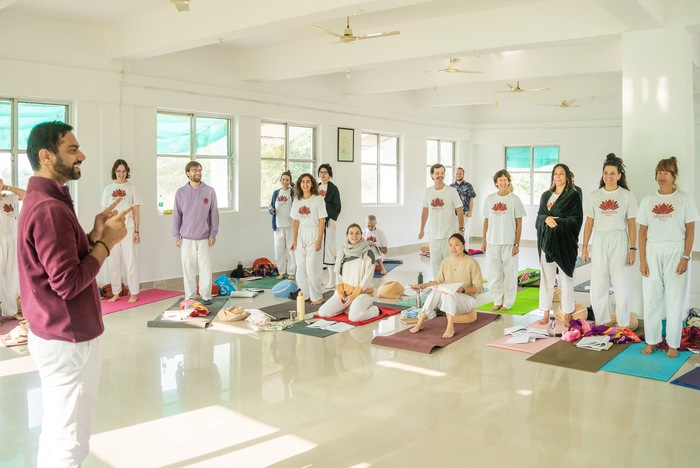
There is no cut-off age for teaching yoga. I have seen people in their 40s, 50s, and 60s begin their yoga teacher training and thrive. Your willingness to learn consistently and adapt your practice usually matters far more than age alone.
Most yoga teacher trainings have no upper age limit
Many established yoga teacher trainings do not impose a strict upper age limit, especially programs designed around adaptable practice rather than performance. If you can attend and engage, age won’t block your growth as a teacher.
Eligibility vs. suitability: an important distinction
Being eligible for training simply means you meet the basic requirements, being physically able to practice and mentally sound to study and teach. Suitability, however, is personal. It involves your commitment, consistency, openness to learning, and willingness to adapt your practice to your body. These factors matter far more than age and apply to everyone, regardless of when they begin their journey.
The flexibility myth: you do not need an “advanced” body
One of the biggest misconceptions is that yoga teachers must be extremely flexible or physically impressive, making people question whether I am too old to become a yoga teacher. In teacher training, clear instruction, body awareness, and safe teaching matter far more than achieving advanced postures. Also, flexibility comes with practice; it’s not limited by age.
Teaching yoga is about understanding, not performing
Yoga teaching is not about teaching advanced postures; it is about guiding others with clarity, safety, and compassion. Many older trainees develop strong observational skills because they tend to pay closer attention to pacing, recovery, and physical limitations during practice. These qualities help create an inclusive, supportive environment in your class that students genuinely connect with.
Life experience can be an advantage
Age gives you perspective. Life experience often improves communication, emotional regulation, and the ability to guide students with patience rather than performance. This maturity is a powerful asset as a yoga teacher.
Becoming a Yoga Teacher: What Matters More Than Age
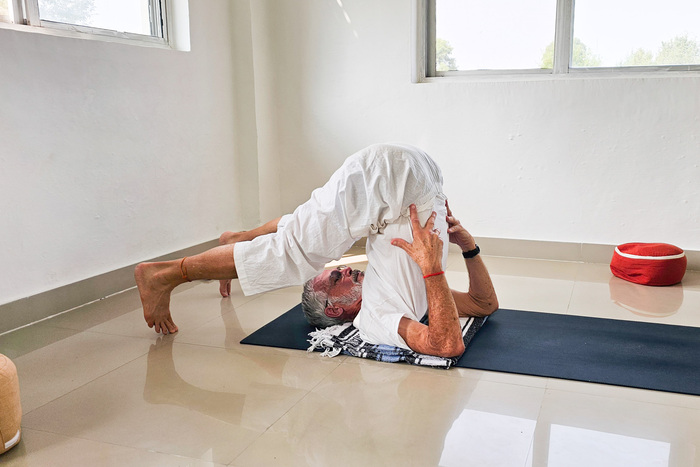
Consistency matters more than peak fitness
If teaching has taught me anything, it's that consistency, not intensity, transforms the body. You don't need to be at your physical peak to become a yoga teacher. What matters is showing up every day, sometimes strong and energized, sometimes tired, but always present.
In long teacher trainings, students who practice consistently, even at a moderate intensity, usually progress more sustainably than those who rely on occasional intense effort.
A genuine willingness to learn
The best teachers are first good students. Curiosity, humility, and openness matter more than prior experience. I remind my students, "You are here to learn, not to prove yourself." Age never limits learning; resistance does. Openness leads to the greatest growth as a yoga teacher.
Comfort with structure and routine
Yoga teacher training follows a rhythm of practice, study, reflection, and repetition. This structure supports lifelong learning, but it also requires commitment. Being able to follow a routine, respect the process, and stay engaged day after day is far more important than physical ability. Whether you begin training in your 20s or your 50s, consistency with practice, study, recovery, and routine usually influences progress more than age itself. Whether you begin training in your 20s or your 50s, consistency with practice, study, recovery, and routine usually influences progress more than age itself, and Arhanta's self-paced online yoga teacher training is designed with exactly that flexibility in mind.
Openness to feedback and self-reflection
Feedback fosters a teacher’s growth. In my classes, I always remind my trainees: feedback is not criticism; it's guidance. Teachers who can receive feedback calmly usually develop clearer teaching skills and better self-awareness over time.
What Older Students Should Expect at a Yoga Teacher Training
If you are considering yoga teacher training at 60, it's wise for you to know what the experience is actually like- beyond assumptions or social media images. Many older students worry that training will be too intensive or physically overwhelming. In reality, a well-designed program is built to support learning across different ages, bodies, and capacities. Here is what you can realistically expect.
Training is demanding, but it is also adaptable
Yoga teacher training is focused and immersive; it asks for commitment, attention, and effort. After more than 21 years of teaching yoga teacher trainings, I have found that well-structured programs challenge students progressively rather than pushing them toward performance. Rather, a well-structured training respects individual capacity and encourages intelligent effort rather than pushing through pain. You will be challenged, but in ways that support learning and long-term sustainability, not in ways that exhaust you.
Modifications and mindful pacing are part of the process
In teacher training, modifications help students practice safely during periods of fatigue, reduced mobility, injury recovery, or limited flexibility. During training, you will learn how to safely change postures, use props when needed, and understand why transitions are important in yoga. Remember, learning to adapt poses for different students is essential if your goal is to become a responsible and inclusive yoga teacher.
Recovery and rest matter more than you think
Recovery matters as much as practice, especially as we age. A well-structured yoga teacher training requires your attention to rest, sleep, and your body’s signals. Ignoring fatigue during intensive training often increases the risk of strain, especially for students balancing work, travel, or recovery needs. Sustainable teaching begins with self-care.
Strength, flexibility, and awareness are not the same
Yoga ability isn’t just about flexibility; training quickly reveals this. Strength gives stability, flexibility offers range, and awareness enables safe movement. Many older trainees compensate for reduced flexibility by developing better movement awareness and pacing during practice.
The Advantages of Becoming a Yoga Teacher at 40, 50, or 60
Becoming a yoga teacher later in life is not about doing more; it is about doing things with greater clarity. While every stage of life brings its own challenges, yoga teacher training at 40, 50, or 60 often offers practical, grounded advantages rather than idealized ones.
Life experience and emotional maturity
By this age, you have already seen enough and lived through change, loss, responsibility, and growth. This experience influences how you show up as a teacher. Now, you are less reactive, kinder, and more considerate toward others and better able to create a safe space for others without needing to fix or impress anyone.
Students frequently respond well to teachers who communicate calmly and create a non-competitive learning environment. They connect with you more when they sense your presence, bringing clarity and calmness to their practice.
Stronger boundaries and self-knowledge
Older trainees usually know their limits and respect them. This type of self-awareness helps prevent overtraining and supports more sustainable teaching habits. This self-awareness is essential in teaching, where engaging in intense sessions too quickly can easily lead to exhaustion.
When your students see their teachers respect limitations, they will learn to normalize this. They will learn to pay attention to the signs their bodies give when they are tired and to pause when they feel they need rest. Such self-awareness helps you grow as a yoga teacher, both on and off the mat.
Better communication and empathy
Clear communication improves with experience. You learn how to explain, listen, and respond with sensitivity. Teachers with broader life experience are often better equipped to realistically explain adaptation, frustration, inconsistency, and gradual progress. This is why I can say this to you confidently: it’s never too late to become a yoga teacher.
Clearer intention for teaching
People who begin their yoga teacher training at 40, 50, or even 60 are rarely doing so on impulse. There is often a clear reason: service, sharing knowledge, or meaningful work. This clarity of motivation often leads to more consistent study habits and a more grounded approach to teaching. Also, this makes you confident as a yoga teacher.
Questions to Ask Yourself Before Starting a YTT
Before enrolling in a yoga teacher training at 50 or at any age, pause for a moment and reflect on these questions. There are no right or wrong answers here, only clarity. This will help you decide if this is the right step for you now.
Why do you want to teach?
Are you only interested in learning authentic yoga with others, deepening your own understanding beyond the mat, or exploring a new path of life? Ask yourself these questions. Teaching yoga also involves lesson preparation, observation, communication, demonstration, and continued study outside class hours. Being clear about your motivation will shape how you experience the training and what you expect from it.
How much time and energy can you possibly invest?
Whether you are enrolling in a Yoga teacher training at 50 or even later, it will certainly require regular practice, study, and reflection throughout the course and beyond. Consider your work, family, and personal responsibilities. Sustainable commitment matters more than intensity. It is better to engage fully within your capacity than to overextend and feel overwhelmed.
Do you have any limitations you need to respect?
Many physical limitations or previous injuries can be accommodated within training, but students may need medical guidance, modifications, or additional recovery support. However, they require transparency and self-awareness. Recognizing your limits enables you to train safely, request adjustments, and guide others with similar needs.
Are you seeking certification, confidence, or personal growth?
Some people have been practicing yoga for years; now they want a recognized certificate. Others want the confidence to teach, and many are seeking just personal transformation through yoga. Ask yourself what your purpose is. understanding what you are truly looking for. This will help you choose the right training and measure success beyond just completing the course and earning a certificate.
Final Thoughts
Becoming a yoga teacher at any age is not about proving anything to yourself or others. It is about meeting this phase of life with clarity, self-respect, and purpose. Age may change how you move. However, it often deepens your listening, observation, and guidance. Those qualities are a plus for meaningful teaching.
If you feel interested in exploring yoga more deeply, whether to teach, to grow, or simply to understand the practice beyond the mat, a well-structured 200-Hour Yoga Teacher Training can offer that space. A well-structured yoga teacher training supports students with different bodies, learning speeds, and stages of life through adaptable practice and clear instruction.
Get a copy of our Wheel of Self-Coaching Exercise directly into your inbox! Start defining a vision for your yoga career today.