
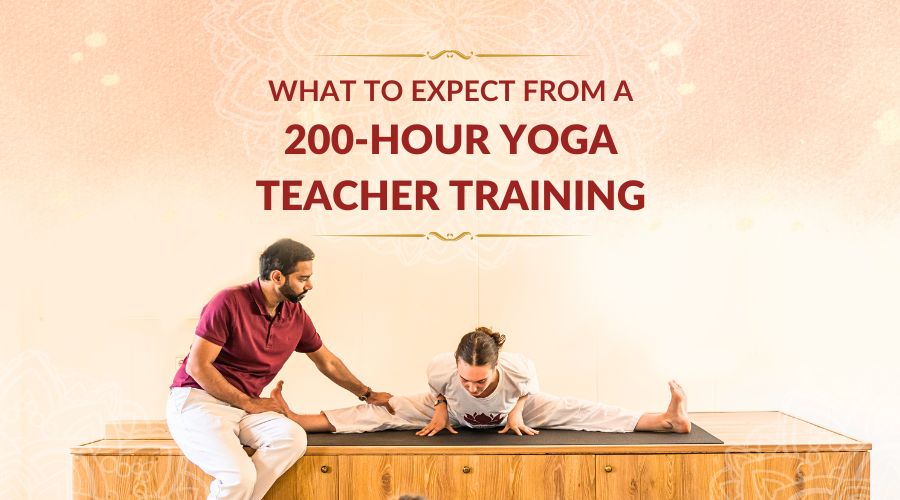

A 200-hour Yoga Teacher Training (YTT) is an immersive program that teaches you how to practice, understand, and teach yoga safely and confidently. Most students can expect daily yoga classes, anatomy lessons, philosophy study, pranayama, meditation, and hands-on teaching practice. Along the way, many discover that a YTT is not only professional training but also a journey of personal growth and self-discovery.
Whether your goal is to teach yoga or improve your own practice, a 200-hour YTT provides the foundation needed to understand yoga beyond the physical postures. In this guide, we'll explore what you can realistically expect from a yoga teacher training and how to prepare for the experience.
What Does a 200-Hour YTT Cover?
As the name suggests, a 200-hour yoga teacher training includes 200 hours of dedicated study and practice. The curriculum is designed to give you both a broad foundation and practical skills and confidence to start teaching straight away. Most trainings cover the following:
- Yoga philosophy: is based on classical texts such as the Yoga Sutras of Patanjali, the Bhagavad Gita, the Upanishads, and the Hatha Yoga Pradipika.
- Asana practice and alignment: with daily classes to refine your technique and teaching skills.
- Anatomy and physiology: focused on safe movement and injury prevention.
- Pranayama and meditation: learning how breath and awareness influence body and mind.
- Teaching methodology: including how to plan classes, guide students, and adapt to different levels.
What to Expect from a 200-Hour Yoga Teacher Training Course?
Deep Dive into Yoga Philosophy
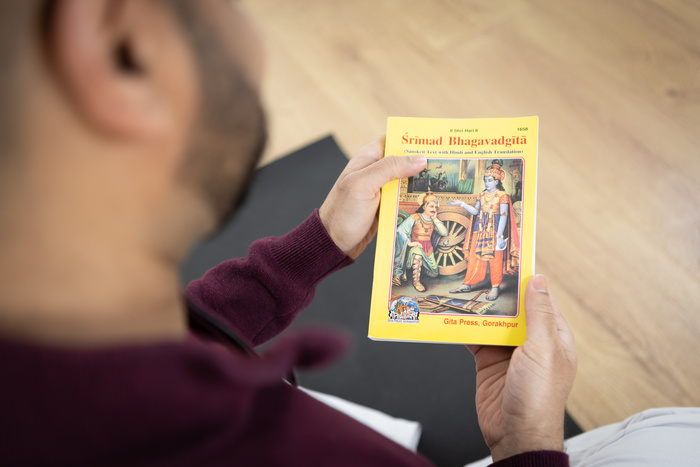
While many people are first drawn to yoga through the physical practice of asanas, a 200-hour YTT takes you much further. To guide others with confidence, you need to understand yoga at its roots, and that begins with yoga philosophy.
In this training, you’ll explore:
- The classical texts that shaped yoga, such as the Yoga Sutras of Patanjali, the Bhagavad Gita, the Upanishads, and the Hatha Yoga Pradipika.
- The eight limbs of yoga, not just as theory but as a map for living a more balanced and mindful life.
- The yamas and niyamas, yoga’s ethical foundations, with practical ways to apply them in today’s world.
- Different branches of yoga, giving you a broad perspective on the many paths within the tradition.
This study isn’t abstract or overly academic. It helps you see how yoga philosophy connects directly to practice, teaching, and daily life. With this grounding, you’ll not only strengthen your own understanding but also be able to share yoga with students in a way that feels authentic and complete.
One of the most common surprises for new trainees is how relevant these teachings feel outside the classroom. Students often arrive expecting philosophy to be the most difficult subject, but many find themselves applying concepts like the yamas, niyamas, and mindfulness to everyday situations, relationships, and decision-making long before the training ends.
Daily Yoga Practice
A cornerstone of the 200-hour YTT is the daily asana practice, usually two to three hours each day. This isn’t simply about repeating postures; it’s about learning to inhabit them with awareness. One of the most common misconceptions about yoga teacher training is that you need to be highly flexible or able to perform advanced postures before joining. In reality, most YTT programs are designed for committed practitioners rather than advanced athletes. Your willingness to learn and practice consistently matters far more than your ability to perform difficult poses.
After guiding teacher trainings for many years, one pattern appears again and again: students often arrive focused on improving difficult poses but leave with a much deeper understanding of awareness, consistency, and mindful movement. The biggest changes are often not visible from the outside.
Through consistent practice, you begin to:
- Refine alignment by understanding not just how a pose looks but how it feels in your body. This is the foundation for guiding students safely in the future.
- Experience a range of styles, from Hatha and Vinyasa to Yin, Restorative, or even Ashtanga, so you develop versatility as both a practitioner and a teacher.
- Understand sequencing and transitions, including how to build a class that flows logically and supports mixed levels.
- Recognize common alignment challenges in yourself and others, and learn practical adjustments to support stability and ease.
Daily practice also strengthens your stamina and discipline, helping you experience firsthand the balance between effort and relaxation, something every teacher needs to embody before sharing it with students.
Beginners often ask how quickly they will notice changes from a regular yoga practice. Individual experiences vary considerably, but many trainees report becoming more aware of their posture, movement patterns, breathing habits, and stress responses within the first few weeks of consistent practice. Physical improvements such as flexibility, strength, balance, and endurance generally develop gradually over time through regular practice.
Anatomy and Physiology for Safer Teaching
At first glance, yoga anatomy can feel intimidating, but in a YTT, it’s taught in a way that directly supports your practice and teaching. The goal isn’t to memorize every muscle and bone, but to understand how the body works in movement so you can guide others safely.
In teacher trainings, anatomy often becomes one of the most appreciated subjects because it helps students understand why certain movements feel comfortable for some people but challenging for others. This understanding makes teaching safer and more inclusive.
Many trainees begin a YTT believing there is one "perfect" alignment for every pose. Anatomy study often challenges this assumption by showing how factors such as bone structure, proportions, mobility, and previous injuries influence the way each person moves. This shift in understanding helps future teachers approach students with greater awareness and adaptability.
You’ll explore:
- Functional anatomy, learning how muscles, joints, and connective tissue interact in different asanas.
- Injury prevention, including how to recognize risks and adapt poses for different body types.
- The principles of safe alignment so you can spot and correct issues before they cause strain.
- The body’s responses to yoga, such as how the nervous system shifts during pranayama or how flexibility changes with regular practice.
This knowledge makes you both a safer practitioner and a more trustworthy teacher. It gives you the confidence to adapt classes to the needs of your students, whether they are beginners with stiff hips or advanced practitioners exploring deeper backbends.
Pranayama and Mindfulness
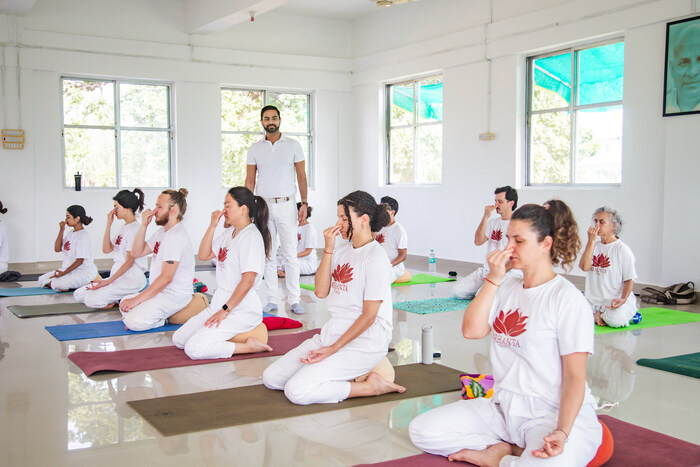
Pranayama and breathwork are one of the most powerful tools in yoga and a central part of every 200-hour YTT. You’ll be introduced to a variety of techniques, including Nadi Shodhana (alternate nostril breathing), Ujjayi, Bhramari, Bhastrika, and Sheetali, each with its own effect on the body and mind.
Rather than practicing them as isolated techniques, you’ll learn how the breath functions as a bridge between body and mind. With guidance, you begin to notice how simply changing the rhythm or depth of your breathing can calm the nervous system, sharpen concentration, or improve your energy.
Alongside pranayama, mindfulness is woven into daily practice. This means cultivating the ability to stay fully present, whether that’s during asana, while eating, or in moments of silence. Instead of rushing through tasks on autopilot, you’ll practice slowing down and observing with awareness, which naturally carries into teaching and daily life.
Emotional Growth and Self-Discovery
One aspect of yoga teacher training that surprises many students is the emotional journey. As daily practice deepens, people often become more aware of long-held habits, fears, and thought patterns. Moments of frustration, self-doubt, excitement, and personal breakthrough are all common parts of the process.
During training, students are encouraged to observe these experiences without judgment. This self-awareness is an important part of yoga and often becomes one of the most valuable lessons graduates take home.
While every person's experience is different, many students describe leaving the training with a stronger sense of self-awareness, greater confidence in their abilities, and a clearer understanding of how yoga can support their personal and professional growth.
Meditation
Meditation is a core part of most 200-hour yoga teacher trainings. Students typically practice meditation daily and learn several techniques that can later be shared with future students. In a 200-hour YTT, you’ll explore different methods so you can experience which ones resonate most with you and later share them with your students.
Some of the approaches you may practice include:
- Mantra meditation, using sound or repetition to focus the mind.
- Breath awareness, observing the natural rhythm of inhaling and exhaling.
- Body scan techniques, which build awareness of subtle sensations.
- Loving-kindness (metta) meditation, cultivating compassion toward self and others.
- Vipassana-inspired practices, observing thoughts and sensations without attachment.
For many beginners, meditation can feel surprisingly challenging at first. Rather than experiencing immediate calm, students often become more aware of how active the mind is. With consistent practice, however, many report improved focus, greater self-awareness, and an increased ability to respond thoughtfully rather than react automatically to daily situations.
Hands-on Teaching Experience
A 200-hour YTT is designed for beginners in teaching, so no prior experience is required. From the start, you’ll learn not only how to practice yoga but also how to share it with others. Teaching methodology is woven into the course, giving you the chance to practice in a supportive environment.
You may begin by guiding a small group of peers, offering simple instructions, or leading short sections of a class. Over time, these opportunities build into fuller teaching practice, always with feedback from experienced instructors. This hands-on experience is what gradually transforms confidence: you move from being a student of yoga to someone ready to guide others with clarity and care.
Immersive Ashram Experience
For those choosing residential training, one of the most memorable aspects is living in an ashram-like setting. Removed from everyday distractions, the environment supports both discipline and reflection.
Days typically begin early, with morning meditation or Sun Salutations, followed by simple, nourishing meals shared in community. Between philosophy lectures, asana practice, and quiet study, there is time to reflect, rest, and connect with fellow students.
This immersion allows you to experience yoga not just as something you practice for a few hours a day but as a way of life. The structured environment often helps students focus more fully on practice, study, and self-reflection throughout the training. While not every 200-hour training takes place in an ashram environment, many residential programs intentionally create a structured setting that minimizes distractions and supports focused learning. If you are weighing online, residential, and hybrid options, a dedicated comparison can help you identify which structure fits your life and learning style.
Guidance from Experienced Teachers
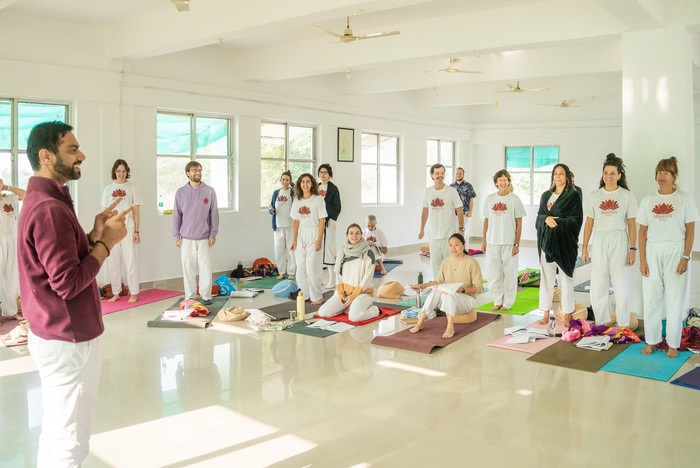
One of the most valuable aspects of a 200-hour YTT is the direct guidance you receive from senior teachers. These instructors bring years of personal practice and teaching experience, and they support you throughout the course, from philosophy lectures to asana alignment.
Rather than just delivering information, teachers observe you closely, correct your practice, and answer questions as they arise. Feedback sessions give you clear insight into your progress and areas for growth. This ongoing support helps you build both technical skill and confidence in your ability to eventually teach on your own.
Nourishing Meals to Support Your Practice
Yoga is not only about what happens on the mat; it is also about how you live and care for yourself off the mat. In residential trainings, meals are designed to reflect this philosophy. You’ll typically be served simple, plant-based sattvic food that is fresh, nourishing, and easy to digest.
These meals aren’t just healthy; they support the physical demands of daily practice, keep the mind light for study, and introduce you to the principles of yogic nutrition. Many students leave with a new appreciation for how food influences energy, focus, and overall well-being, often carrying these habits into their lives beyond the training.
A Demanding but Rewarding Daily Schedule
Life during a 200-hour YTT is structured and disciplined. The days are full and intensive, often starting at sunrise and continuing until evening, but the rhythm of practice, study, and rest is designed to support both body and mind.
Many students begin their YTT expecting the physical practice to be the hardest part. In reality, the combination of daily classes, philosophy study, anatomy lessons, teaching practice, and self-reflection can be mentally demanding as well. It is normal to feel physically tired, challenged by new information, or stretched outside your comfort zone during the first weeks of training.
For many trainees, the greatest challenge is not the physical practice but maintaining focus and energy through a full day of study, self-reflection, teaching practice, and group learning. Most students gradually adapt to the pace as the training progresses.
A typical residential schedule might include:
- 6:00 AM – Morning pranayama and sun salutations
- 6:30 AM – Asana practice
- 8:30 AM – Breakfast
- 10:00 AM – Yoga philosophy lecture
- 1:00 PM – Lunch
- 2:00 PM – Anatomy and physiology class
- 4:00 PM – Restorative or teaching methodology session
- 6:30 PM – Dinner
- 8:00 PM – Evening meditation, journaling, or group discussion
The structure may differ slightly between schools but the intention is the same, that is to immerse you fully in the practice and lifestyle of yoga. Most students find the schedule challenging at first, but soon discover that it creates focus, stability, and a sense of community that makes the experience deeply rewarding.
A Yoga Alliance Accredited Certificate
Completing a 200-hour yoga teacher training from a Yoga Alliance Registered Yoga School (RYS) allows graduates to apply for Yoga Alliance registration and demonstrates that the training follows internationally recognized educational standards. For many students, it marks the transition from being a dedicated practitioner to stepping into the role of teacher. It shows you’ve completed a structured training that meets international standards, giving you the credibility to start teaching with confidence.
This certification opens different paths depending on your goals. Some graduates begin teaching in local studios or gyms, while others prefer offering private sessions or online classes. There are also opportunities in corporate wellness programs, where yoga is increasingly valued for stress management and team well-being. If you are ready to explore what a structured, Yoga Alliance-accredited training looks like in practice, you can review the 200-hour YTT in India to see exactly what the curriculum, schedule, and certification process involve.
Supportive Yoga Community
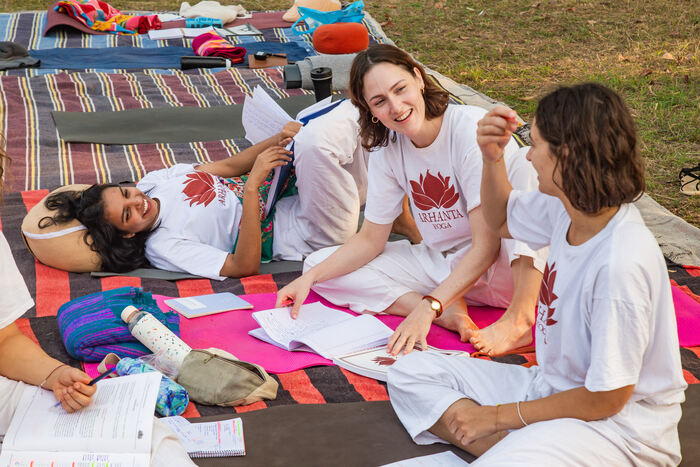
One of the most lasting parts of a 200-hour YTT is the community you become part of. Training in such an immersive environment means you spend weeks practicing, studying, and living alongside people who share the same dedication to yoga. These shared experiences create a strong sense of connection that often extends far beyond the course itself.
The group discussions, shared meals, and collective practice create an atmosphere where support comes naturally.
This network is valuable both personally and professionally. It reminds you that teaching yoga isn’t a solitary path; you are part of a wider community of practitioners and teachers, all learning and growing together.
A common concern among new trainees is the fear of teaching in front of others. This is completely normal. Many students feel nervous during their first practice class, but confidence develops quickly through repetition, feedback, and supportive guidance.
Common Misconceptions About Yoga Teacher Training
Many people start a YTT with expectations that don't match the reality of the experience. Understanding these misconceptions can help you prepare more effectively.
You do not need to be highly flexible. A YTT teaches you how to understand and teach yoga, not how to perform advanced postures.
The training is not only about asana practice. Philosophy, anatomy, meditation, pranayama, and teaching methodology are equally important parts of the curriculum.
You do not have to become a yoga teacher afterward. Many graduates join solely for personal development and never teach professionally.
Growth can feel uncomfortable at times. Learning new skills, receiving feedback, and stepping into a teaching role can feel challenging, but these experiences are often where the greatest learning happens.
Final Thought
A 200-hour YTT provides a structured introduction to yoga as a whole. It combines philosophy, asana practice, pranayama, meditation, and teaching methodology into one comprehensive program. Alongside the practical skills, you gain an internationally recognized certification and the support of a community of fellow practitioners.
Many prospective students wonder whether a 200-hour YTT is worth the time, effort, and investment. Many graduates describe the value of the training as extending beyond the certificate itself, particularly through the knowledge gained, the teaching skills developed, and the opportunity for deeper self-reflection. Alongside learning how to teach yoga, students often develop greater self-awareness, discipline, confidence, and a deeper understanding of the practice. Even those who never teach professionally frequently describe the training as one of the most meaningful learning experiences of their lives.
Holistic Hatha Sequencing for Practitioners & Teachers
Get 17 primary asanas and key principles for a balanced practice sent straight to you.
