
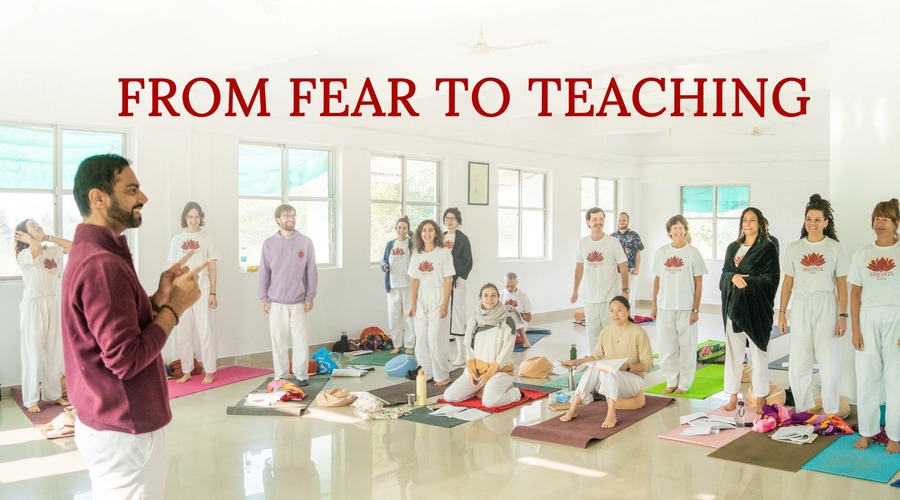

“Can I really teach a class?” This is one of the most common questions I hear from my students at the beginning of their journey. Many of them even quietly admitted that they don’t feel confident enough to guide a class or feel afraid to teach yoga in front of others.
If this is how you also feel, let me tell you that you are not alone. This fear does not come from a lack of potential, but from not yet having the structure and experience you can rely on.
Let me make this clear: you are not expected to be confident before you begin. A well-designed yoga teacher training is meant to build that confidence step by step, through guided practice, clear instruction, and repetition in a supportive environment. Over time, teaching stops feeling intimidating and starts feeling natural.
Now, let’s explore how YTT enhances your skills as a yoga teacher and helps you build real confidence. Ready to take your next step? Commit to your yoga journey and see how teacher training can transform you.
Feeling Afraid to Teach Yoga? This Is More Common Than You Think

If you feel afraid to teach yoga, it may initially seem like you are the only one struggling. But in reality, this is one of the most common experiences I see in every yoga teacher training. Students often join yoga teaching with self-doubt, quietly questioning themselves: “Am I flexible enough to teach yoga?” “Do I know enough to guide others?” “What if I forget everything while teaching?”
I still remember a student who had been practicing for years, yet on the first day of practice teaching, she hesitated to even stand at the front of the room. Her concern was not her ability; it was the fear of speaking and leading others. Let me reassure you that this fear of teaching yoga does not come from a lack of potential, but from a lack of structured experience.
Many also wonder, “Can I teach yoga after a 200-hour YTT if I still don’t feel confident enough?” This question is natural. Confidence does not exist at the beginning; it develops over time. As you move from observing to practicing, you eventually overcome the fear and start teaching with clarity. What you are feeling is not a limitation; it is simply the starting point.
Why Do So Many People Feel Nervous About Teaching Yoga?
When students tell me they feel nervous about teaching, I often ask them a simple question: “What exactly are you unsure about?” Almost always, the answer is not one big fear, but a few very practical concerns, such as
Lack of Structured Knowledge
Many students feel uncertain because they do not yet know how to organize a class. They may have practiced yoga for years, but teaching is very different from practicing. In teaching, you are no longer just practicing; you are guiding. Without a clear structure for sequencing, cueing, and class flow, it is natural to feel unsure about what to say next or how to lead a class.
No Teaching Experience
In my experience, this is one of the biggest reasons behind the fear of teaching yoga. If you have never taught before, even standing in front of a small group can feel uncomfortable. This is not a lack of ability; it is simply a lack of exposure. Teaching becomes easier only when you start doing it.
Comparison with Advanced Teachers
I often see students comparing themselves to teachers who have been teaching yoga for many years. This creates unnecessary pressure. You are looking at someone’s experience and expecting the same of yourself as a beginner, which isn’t practical. Every confident teacher you see today once started without that confidence. The difference is, they stayed with the process long enough to grow into it.
To go deeper into this, read our complete blog on 10 Beginner Yoga Teaching Mistakes That Can Hold You Back (And How to Fix Them)
Do You Need to Be Confident Before Starting a Yoga Teacher Training?
No, you do not need to be confident before starting a yoga teacher training. In fact, expecting confidence at the beginning is one of the most common unrealistic expectations I see.
Many students come into training thinking they should already feel ready to teach. But yoga teacher training is not designed for people who are already confident; it is designed for those who want to learn how to teach. You are not joining to perform; you are joining to understand, practice, and gradually develop your skills.
Confidence is not something you bring with you on the first day. You develop it eventually during training as you learn to structure a class, practice teaching in a guided environment, and receive real-time feedback from experienced teachers.
If you shift your mindset from “I need to be confident” to “I am here to learn and grow,” the entire experience becomes more transformative. You give yourself enough space to make mistakes, learn from those mistakes, and naturally grow into the role of a teacher.
How Does Yoga Teacher Training Help You Overcome the Fear of Teaching?
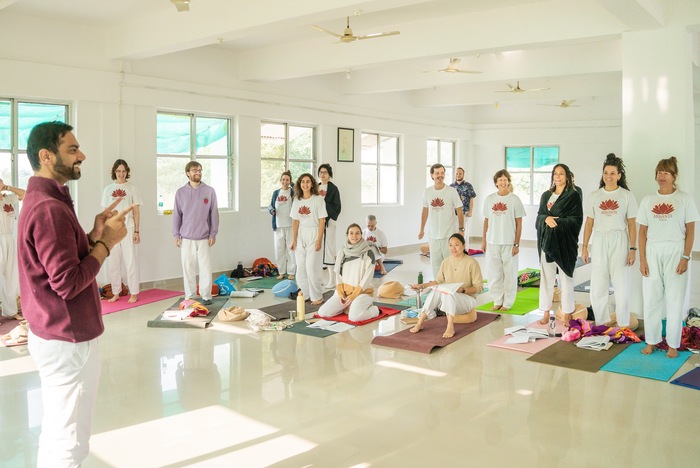
When students ask me how to overcome their fear, I explain that yoga teacher training is not about suddenly becoming confident; it is about following a clear, step-by-step process. Confidence is built through structure, practice, and consistent guidance. Each part of the training is designed to take you from uncertainty to clarity.
Structured Learning Gives You Clarity on What to Teach
One of the main reasons for hesitation is not knowing what to teach. Even experienced yoga practitioners who have been practicing for years feel confused initially when teaching. In a structured training, this confusion slowly fades. You learn how to sequence a class, understand alignment, and create a clear class structure. During a Yoga Teacher Training (YTT), you begin to follow a system. This clarity reduces doubt and gives you a solid foundation you can rely on.
To deepen this understanding further, read our complete blog on Yoga Cues: Teacher Dos & Don’ts for a Safe & Functional Class.
Practice Teaching Helps You Gain Real Experience
In every training, there comes a moment when students are asked to teach for the first time. Initially, they hesitate due to a lack of confidence. But because this happens in a safe and supportive environment, there is no pressure to be perfect. You are learning, not being judged. With each practice session, teaching becomes more natural.
Step-by-Step Guidance Builds Your Teaching Skills
Teaching is not a single skill; it is a combination of many smaller skills. You learn how to give clear cues, demonstrate postures, and make simple adjustments. When these skills are taught step by step, the process becomes easier to understand. What once felt extremely hard starts to feel manageable. I have seen some of my students, who were initially the shiest ones, now confidently teaching yoga in studios, Ashrams, and retreats.
Feedback from Teachers Improves Your Confidence
Another important part of training is feedback. After teaching, you receive clear, constructive feedback. This helps you understand what you are doing well and where you can improve further. Over time, this builds trust in your own ability, because you are no longer guessing; you are refining your skills with guidance.
Repetition Makes Teaching Feel Natural
At first, teaching may feel uncomfortable simply because it is new. But as you repeat processes such as planning, guiding, and speaking, they become familiar. With repetition, hesitation reduces. Confidence grows not from thinking, but from following the same process again and again until it feels natural.
If you want to see how this process unfolds over time, discover one of our students’ journeys, From Living Room Videos to Her Own Studio: One Teacher’s 12-Year Yoga Journey.
What Skills Do You Gain from a 200-Hour Yoga Teacher Training?
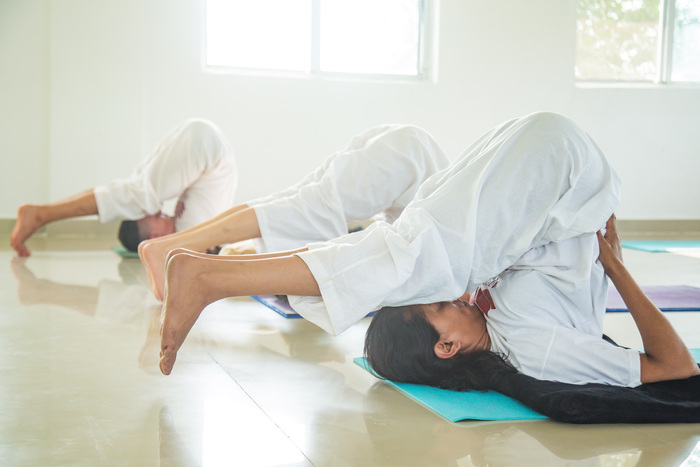
When students start their 200-hour training, they often think they will only learn postures. But very quickly, they realize that teaching requires a specific set of practical skills. They don’t usually have these skills; they gradually develop them during training.
Class Planning and Structuring
One of the first skills you build is planning a class. Instead of randomly choosing poses, you learn how to create a logical sequence with a clear beginning, middle, and end. From giving clear cues to offering real-life insights on how to lead a mixed-level class, this training aims to provide you with all the guidance you need for class planning and structuring. I have seen students who initially felt completely lost become confident once they understood how to structure even a simple 60-minute class.
Clear and Effective Communication
Teaching requires you to communicate in a way that others can easily follow. You learn how to give clear, concise instructions without over-explaining. At first, many students either say too much or too little. With practice, your communication becomes more precise and easier for students to understand.
Observation and Student Awareness
Another important skill is learning how to observe. When you teach, your attention shifts from your own practice to observing your students, correcting them, and giving them effective adjustments. Eventually, you begin to notice how different bodies move, where someone may need support, and how to guide them safely. This awareness develops gradually with practice.
Improved Body Awareness
As you learn to teach others, your own understanding of the body becomes clearer. You start to recognize proper alignment in common asanas, movement patterns, and how different postures affect the body. This not only improves your teaching but also deepens your own practice in a practical way.
These skills are developed step by step during the training. What may feel unfamiliar at first becomes more natural as you repeatedly apply these skills in a guided environment.
For a clear understanding, continue reading What Skills Do You Learn in a 200-Hour Yoga Teacher Training.
Can You Teach Yoga Confidently After a 200-Hour YTT?
This is a question almost every student asks towards the end of their training. The honest answer is: yes, you are prepared now to start teaching. But at the same time, confidence continues to develop with experience.
By the end of a 200-hour YTT, you have the essential tools to begin your teaching. You understand how to structure a class, guide students safely, and communicate clearly. I have seen many students who felt unsure at first successfully teach their first classes by simply applying what they learned step by step.
At the same time, it is important to understand that confidence does not become permanent overnight. Your first few classes may still feel challenging. You may hesitate, commit some early teaching mistakes, forget small details, or question yourself. This is part of the learning process and not a sign that you are unprepared.
What matters is that you now have a clear foundation. From here, confidence grows each time you teach, observe your students, and refine your approach.
For a deeper understanding of this transition, read Can You Teach Yoga Confidently with a 200-Hour Certification?
What If You Still Feel Nervous After Completing Your YTT?
Completing yoga teacher training does not mean your nervousness will vanish. Many still feel unsure when teaching outside the training environment. This is normal.
Your first classes will almost always feel challenging. You may overthink, second-guess instructions, or notice every small mistake. I have seen this even in students who excelled in training. Transitioning from learning to real teaching comes with new responsibilities.
What builds confidence at this stage is not more theory, but real experience. When you step out of your comfort zone and begin teaching actual students, you start to understand how to respond, adapt, and guide with more ease.
Often, what you are experiencing at this stage is what people call self-doubt or imposter syndrome. This is a feeling that you are not yet ready, even though you have the necessary training.
To overcome imposter syndrome and bring confidence in your teaching, explore How to Overcome Imposter Syndrome as a New Yoga Teacher.
Simple Ways to Overcome the Fear of Teaching Yoga
For many, the real challenge begins after the training ends. Students know what to do, but when they are about to teach on their own, they pause. Not because they are unprepared, but because it is now their responsibility to lead the class without guidance. This is where small, practical steps become important.
Start by Teaching Friends or Small Groups
In the beginning, reduce the pressure. Instead of stepping into a full class, start by teaching a friend, a family member, or a small group. This creates a comfortable environment where you can focus on guiding rather than worrying about being judged. I have seen many students gain their initial confidence simply by teaching in a familiar setting. Your next step: Arrange a short session with someone you trust and reflect on how you feel after teaching.
Prepare and Practice Your Class in Advance
One of the main reasons for anxiety is uncertainty. When you prepare your class in advance, you remove much of that uncertainty. Plan your sequence, practice your instructions, and mentally go through the flow. When you know what you are going to teach, you feel more confident, and that confidence gets reflected in your presence. Next, create a basic lesson plan and rehearse it as if teaching real students.
Focus on Your Students, Not Your Fear
In the early stages, it is natural to be self-conscious, like doubting your voice, overthinking your instructions, and focusing on your mistakes. But effective teaching happens when your attention shifts outward. When you start to focus on your students, their movement, their comfort, and their understanding. This way, you become more present as a teacher.
Keep Learning and Improving Your Skills
Confidence grows when you continue to learn. Attend classes, sign up for advanced training, continue observing experienced teachers, and refine your own teaching after each session. Every class you teach gives you real-time feedback. When you treat teaching as an ongoing learning process, your confidence develops steadily and becomes more stable over time.
If you are still in the learning phase and want to understand how this confidence is built step by step during training, explore what to expect in a 200-hour YTT.
Final Thoughts
The fear of teaching does not disappear on its own. It reduces when you understand the process and go through it with the right structure.
In a 200-hour Yoga Teacher Training, this process is not left to chance. You are guided through each step, learning, practicing, teaching, and refining, until confidence becomes a natural outcome of your experience.
To teach yoga confidently as a certified teacher, it is important to follow a structured training. Explore our 200-hour Yoga Teacher Training to understand how it prepares you step by step.
If you are looking for more flexibility in your training, you can also choose our 200-hour Online Yoga Teacher Training and complete your certification remotely.
Holistic Hatha Sequencing for Practitioners & Teachers
Get 17 primary asanas and key principles for a balanced practice sent straight to you.
