
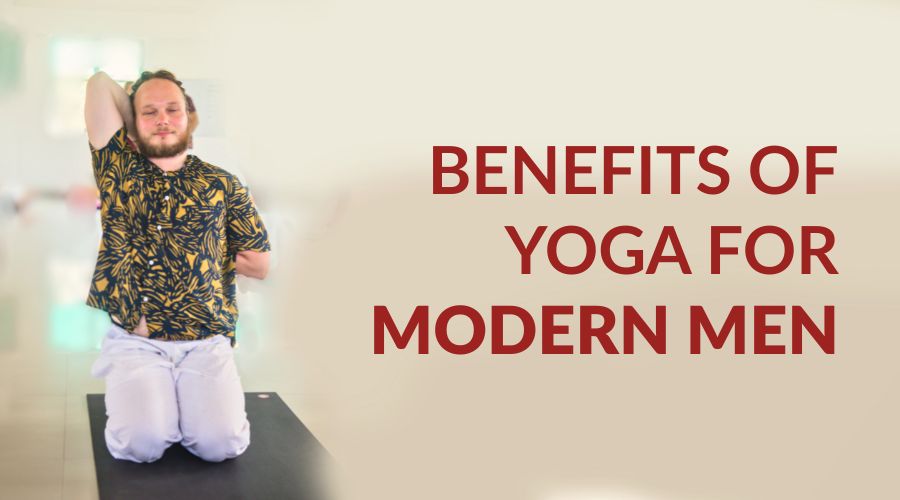

Many men today are carrying more than they realize. Long hours, constant pressure to perform, and little space to recover create a quiet strain that doesn’t disappear with sleep or a day off. It shows up as tightness in the body and fatigue that lingers even when things look fine on the surface.
As a yoga teacher and trainer, I’ve seen this pattern repeatedly. I’ve also lived it. What draws men to yoga isn’t flexibility or relaxation alone. It’s the need for a practice that builds real strength while helping the nervous system recover. Yoga offers both. It develops physical stability and mobility while addressing stress, burnout, and mental overload at the root.
In the article that follows, I’ll explore why so many men are turning to yoga today, how it supports strength and healing together, and how it helps with common challenges in a way few other practices do.
Is Yoga for Men?
Yoga has no religion, no gender, and no boundaries. It is for everyone who wants to build a healthy, strong life through a holistic approach.
I understand that for a long time yoga was often perceived as more suited to flexibility or relaxation, and many men weren’t sure whether it was the right fit for their needs. But thankfully, that perception no longer exists.
As conversations around stress, burnout, and overall well-being become more open, more men are beginning to explore practices that support both the body and the mind, and yoga naturally fits into that shift. Wondering how? Here you go.
Benefits of Yoga for Men in a Modern World

Yoga offers practical tools to combat the challenges that men often experience in modern life like busy routines, long hours of sitting, intense workouts, and ongoing stress. Here’s how yoga helps men build strength, protect their bodies, gain clarity, and find peace in a digital world.
Builds Functional Strength
Yoga builds strength in a way that translates directly into daily life. Instead of isolating muscles, poses require coordinated effort across the whole body. Core stability, joint control, and the smaller postural muscles all work together at once.
This kind of strength supports how you actually move. Lifting objects, maintaining posture at a desk, carrying weight, or staying stable under load. For men who already train in the gym, yoga fills the gaps that lifting often misses. It improves balance between muscle groups and builds strength without constant joint stress.
Improves Mobility and Flexibility
Stiffness is a common side effect of modern routines. Long hours sitting, limited movement patterns, and repetitive training narrow the body’s range of motion over time. Hips tighten, shoulders lose freedom, and the spine becomes less adaptable.
Yoga addresses this by combining strength with controlled lengthening. You don’t just stretch. You learn to move through ranges of motion with stability. Off of the mat, this improved mobility leads to better lifting form and a body that feels more capable rather than restricted.
Read More: Chair Yoga: How to Teach Yoga for Restricted Mobility
Prevents Injuries
Common injuries like back strain, tight hamstrings, and shoulder pain usually stem from imbalances. Yoga corrects these early through body awareness and alignment.
Regular yoga practice strengthens muscles, supports joint mobility, and teaches safer movements. Whether you prefer lifting weights in the gym or running, yoga helps keep the body resilient and reduces the risk of overuse injuries.
Eases Stress & Burnout
Stress doesn’t stay in the mind. It shows up as shallow breathing and a nervous system that never fully switches off. Yoga works here by slowing things down. Through steady movement, breathwork, and stillness, the body learns how to come out of alert mode.
The shift happens gradually. With consistent practice, men begin to experience deeper sleep, steadier energy, and less mental reactivity. For those carrying long-term workload pressure, yoga has also become a reliable way to recover rather than just cope.
Try This: 15-Minute Yoga Practice for Stress Relief
Supports Mental Health and Emotional Stability
Yoga and pranayama breathing practices offer structure and grounding, especially during periods of low mood or mental overload. Movement releases physical tension. Breathwork regulates the nervous system. Stillness creates space to observe rather than react.
These practices don’t replace professional support, but they do help men reconnect with themselves in a practical way. Over time, focus improves and emotional awareness sharpens. This carries beyond the mat into work, relationships, and everyday decision-making.
Yoga trains the ability to notice stress early, adjust behavior, and stay present under pressure. That awareness is one of its most valuable benefits, both physically and mentally.
Yoga for Men: Practical Tips to Get Started
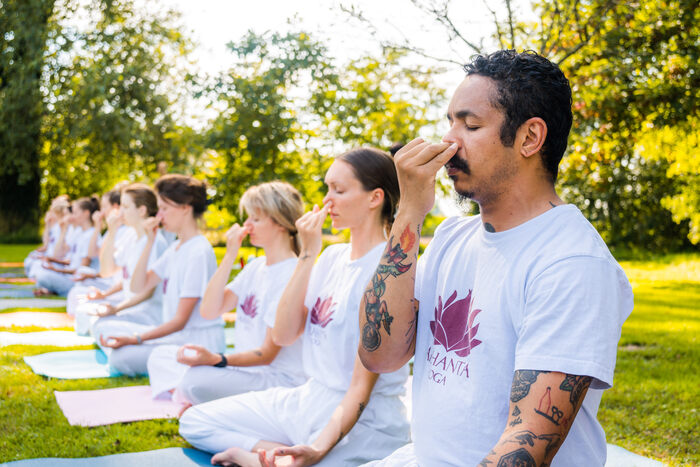
Men often hesitate to start yoga because they think they need a certain level of strength, flexibility, or experience. That’s simply not true. You don’t need long sessions or perfect form. What matters is consistency and a willingness to learn how your body responds.
The tips below focus on building a practice that feels sustainable. They’ll help you start safely, avoid unnecessary strain, and get real benefit from yoga without overcomplicating it.
Focus on Technique Over Intensity
In yoga, progress doesn’t come from pushing harder. It comes from moving with control. For men especially, the instinct is often to add effort or speed. Yoga works better when you do the opposite. Slow the movement down and pay attention to how the body is organizing itself.
When you focus on alignment, breath, and stability, you build strength that actually lasts. Joints stay supported. Muscles work together instead of competing. You learn where to engage and where to ease off. This approach protects your body now and gives you a solid base to build on, whether your goal is better performance, recovery, or long-term resilience.
Use Props to Support Proper Alignment
Props are simply tools to help the body work more efficiently. Blocks, straps, cushions, and bolsters all give you support where it’s needed, so you can settle into a pose without forcing it. This allows you to focus on stability, breath, and control rather than trying to “reach” a shape.
Using props also helps you maintain clear alignment as you learn new movements or work with areas that feel tight or tired. Over time, this builds strength and awareness in a steady way, supporting progress without unnecessary strain.
Develop Flexibility Gradually
Mobility improves with time and consistency. Long hours of sitting and repetitive movement patterns create stiffness that doesn’t unwind in a single session. Yoga works by addressing this gradually, through controlled movement and steady breathing.
The key is patience. When you move within your current range and allow the body to adapt, tension releases without strain. Small, regular improvements add up. This approach keeps joints healthy, supports recovery, and makes progress feel sustainable rather than forced.
Combine Strength Work with Breathwork
Breath plays a central role in how the body handles effort. When strength work is paired with steady breathing, movement becomes more controlled and efficient. This is especially useful for men who carry stress or mental fatigue into their practice.
By keeping the breath slow and consistent during strength-focused poses, the core engages and unnecessary tension drops away. The mind stays steady instead of reactive. Even a few minutes of simple breath awareness before or after practice can change how the whole session feels.
Listen to Your Limits
Every body is different. What feels comfortable for someone else may feel challenging for you, and that’s completely normal. Pay attention to pain, sharp discomfort, or strain. These are signals to slow down, modify, or just take a break.
Yoga is most effective when practiced with awareness, not force. Listening to your body helps you grow safely and stay consistent over time. So, instead of following some unrealistic goals, just listen to your body. Pause, breathe, and give your body the rest it needs.
How Yoga Teachers Can Support Men in Yoga
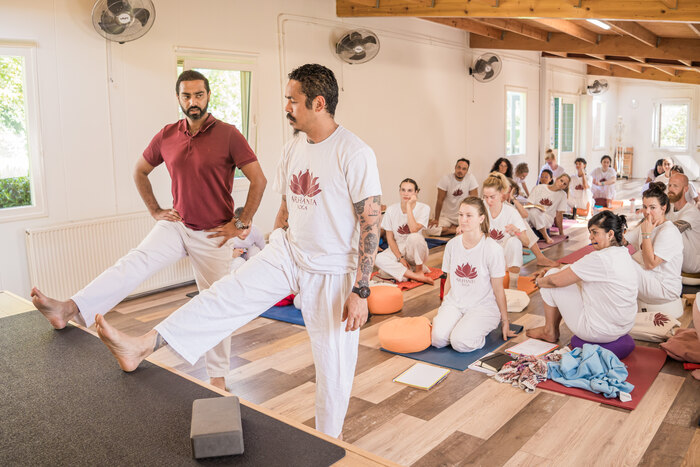
Use Clear Cues
Most men respond best to cues that relate directly to function and stability. Instructions work better when they describe an action the body can immediately feel, rather than an abstract idea. This helps students understand why they’re doing something, not just what it should look like.
Cues such as “press evenly through the feet to steady your balance,” “brace the core as if preparing to lift,” or “lengthen the spine to take pressure out of the lower back” give clear direction with purpose. They link movement to strength, control, and safety.
This kind of cueing builds confidence, especially for men who are new to body awareness or structured movement.
Avoid Assumptions
Men arrive at yoga from many different backgrounds. Some have strength but limited mobility. Others move easily but lack stability or control. Assuming a certain level of ability, fitness, or experience can create unnecessary pressure and make students feel out of place.
Approach each student as an individual. Focus your cues on alignment, breath, and safe movement rather than expectations. When instruction stays neutral and practical, students feel supported instead of compared.
Offer Modifications Without Pressure
Modifications aren’t about making a pose easier. They’re about making it more effective. Clear options help students work with their bodies as they are, especially when dealing with tight hips, shoulders, or hamstrings.
How you introduce modifications matters. Framing them as tools for better stability or alignment keeps confidence intact. Saying “this option helps keep the spine long” or “this supports the shoulders” gives purpose without judgment. When students understand why a modification is offered, they’re more likely to use it.
Create an Inclusive Environment
A welcoming environment helps all practitioners, including men, feel comfortable. This can include:
- using neutral, supportive language
- encouraging questions or feedback
- avoiding comparison-based cues
- offering space for students to learn at their own pace
When students feel seen and heard, they’re more likely to relax. If they aren’t singled out, they’ll try new movements and stay consistent with their practice.
Discover: Hands-On Adjustments for Yoga Teachers: Do’s, Don’ts & Best Practices
Final Thought
Modern life can take a toll on our mental state, especially men. But yoga offers a gentle way for us to rebuild strength, release stress, and feel more balanced each day. If you’d like to explore yoga more deeply, our 200-hour Yoga Teacher Training provides a clear, supportive path to strengthen your practice and deepen your understanding.
Holistic Hatha Sequencing for Practitioners & Teachers
Get 17 primary asanas and key principles for a balanced practice sent straight to you.
